Observing the Mountain
On drawing and representation

When we observe a mountain, what we see is the configuration of a form: its base, geography, peak, colors, and physical composition. But we also “see” the experience of the mountain—its scent, atmosphere, sounds, and the memories associated with it. What we observe, therefore, is also the idea we have built of the mountain throughout our lives. It is our mountain and, at the same time, all mountains.
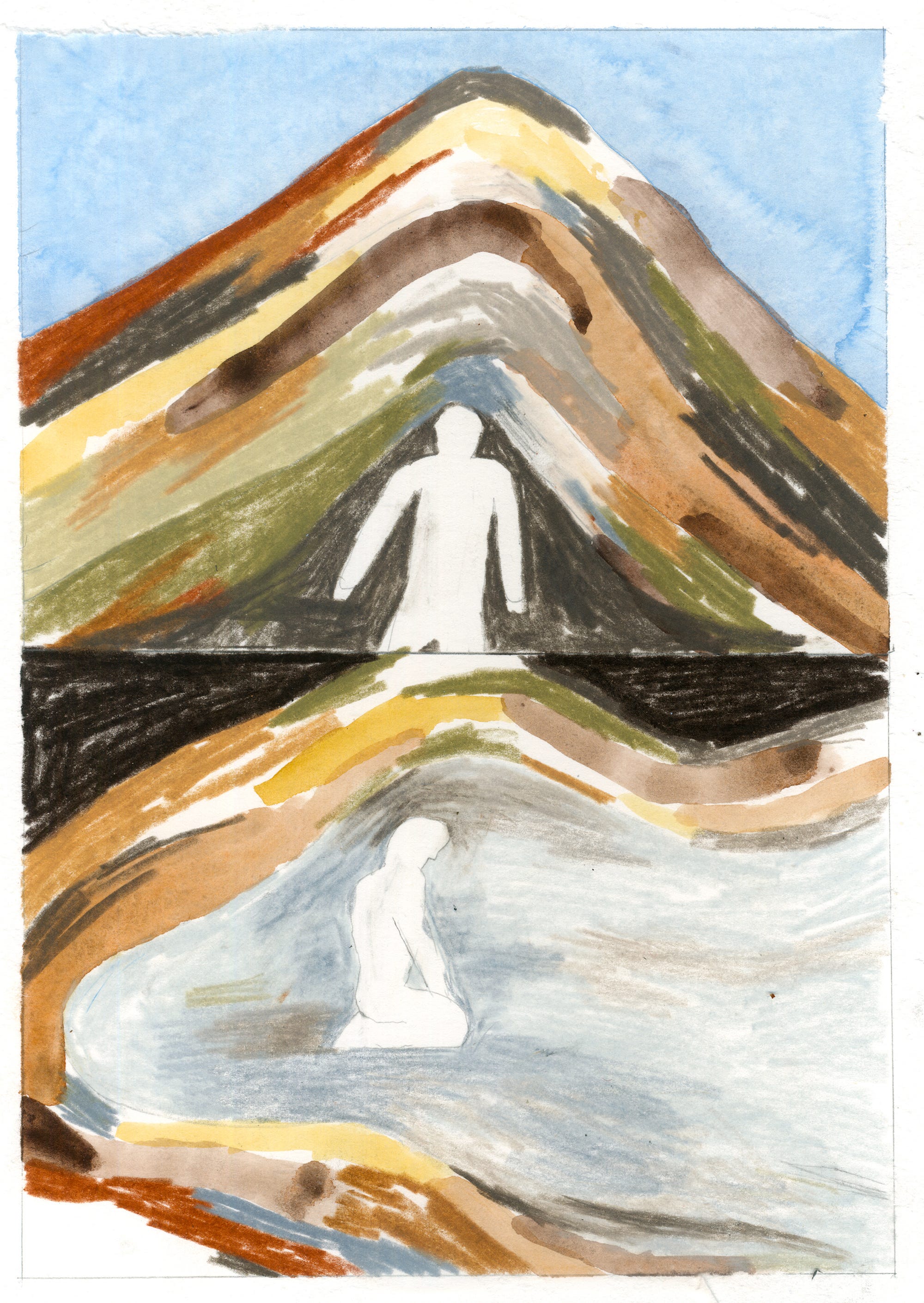
We do not observe only with our eyes or with the sensory systems of the body, but with the most enigmatic receptor we possess: consciousness. As we move through the mountain, we adopt different points of view; we feel thirst, hunger, cold, heat. What happens along the way becomes part of the experience and shapes a subjective reality that is uniquely our own. Another, deeper dimension also emerges: the unconscious, where collective consciousness comes into play—the inheritance of human existence as an experience that endures and appears like a beam of light in the immediate present.
We are meaning-making beings who, through experience, assign value to the world around us. Werner Herzog writes in his memoirs “Every Man for Himself and God against All” that what led him to make films was the pursuit of images and the desire to endow them with meaning. The artist’s task, Herzog suggests, is to articulate stories from these images that arise from both personal and collective consciousness. The mystery of the image lies at the heart of all artistic activity.
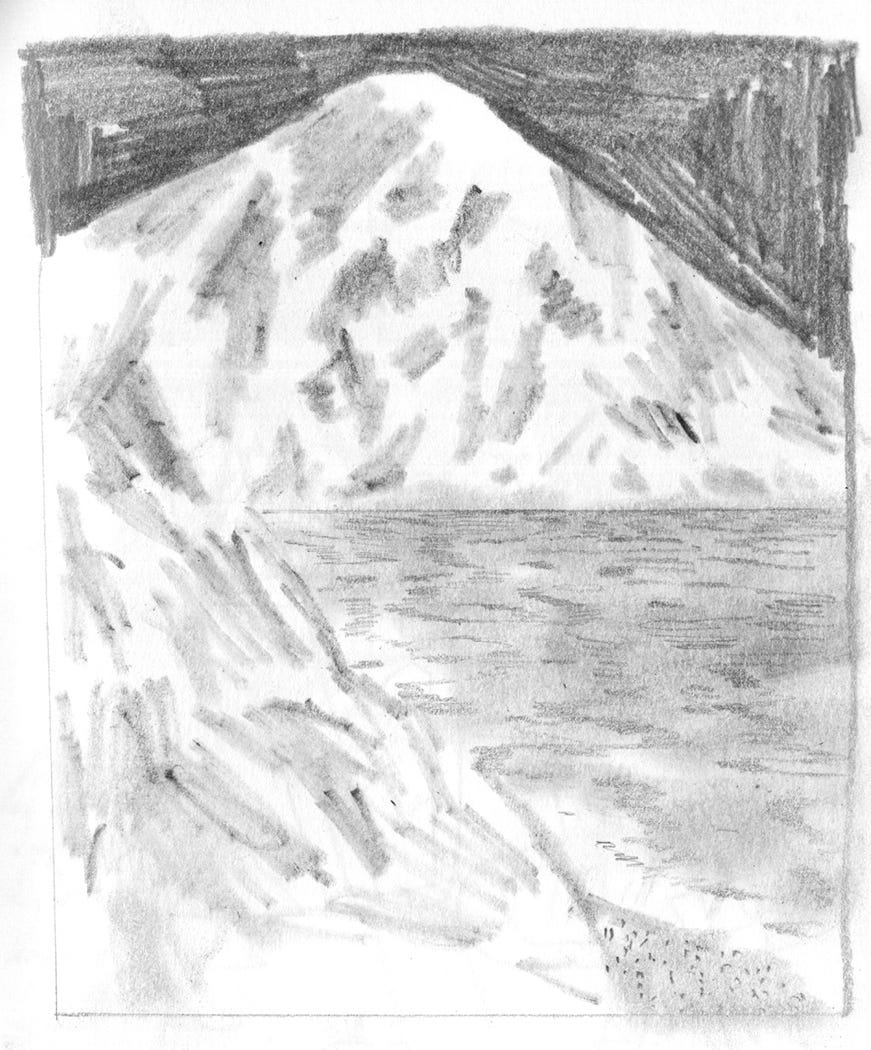
Observation as experience becomes the point of dialogue between our consciousness and the world—the moment of contact with reality. This takes on particular importance in times of frenetic emotional distraction, short-term thinking, and emerging intelligent systems. To crystallize the present is to affirm the world as we perceive it. Our point of view becomes visible.
Drawing is the practice of this exploration. It is a natural way of experiencing the world, representing it, and transforming it in order to give it meaning. It is not a reproduction of reality, but its transformation into a universal symbolic language.
This first part of the annual Drawing Workout course, the Point of View Module, explores drawing not merely as a representational medium, but as observation as experience—abstraction, symbolic language, and chance as method. Through eight classes and guided exercises, we will work together to set aside deeply rooted preconceptions about drawing—such as realistic representation or technical skill—and open the way to a free, expressive language as an authentic way of seeing our world.